• Skip to main content
presidio-group-logo
  • About
  • Services
    • Finance Consulting
    • Vehicle & Equipment Finance
    • Financial Services
    • Home Ownership
    • Confidence to Grow
    • Property Consulting
    • Services for professional advisers
  • Team
  • News
  • Contact
×
  • About
  • Services
    • Finance Consulting
    • Vehicle & Equipment Finance
    • Financial Services
    • Home Ownership
    • Confidence to Grow
    • Property Consulting
    • Services for professional advisers
  • Team
  • News
  • Contact
07 3391 7055
Need vehicle or equipment finance?

support

End of financial year tax tips for investors

support · Jun 17, 2025 ·

Tax time might not be everyone’s favourite season, but it’s a great chance to tidy up your finances.

If you own an investment property, it’s important to be aware of all of the tax deductions that could be available to you and plan smartly for the year ahead. Below is some general guidance, along with helpful links, to steer you through some top tips for the season.

Know what rental expenses you can claim

As a general rule, if you’ve spent money to earn rental income and kept records, you may be able to claim it as a tax deduction.

The Australian Taxation Office (ATO) sorts rental property expenses into three main types:

  • Immediately deductible expenses (in the income year you incur the expense) – like interest on your investment loan, council rates, pest control, repairs and maintenance, and low-cost depreciating items (under $300).

  • Deductions over time – such as capital works, borrowing expenses, and asset depreciation over several years.

  • Expenses you can’t claim – such as personal expenses if you’re living in the property some of the time or certain second-hand depreciating assets purchased after 9 May 2017.

Split expenses if the property isn’t always rented

Do you list your investment property on short-stay platforms like Airbnb? Or only rent out part of it, like a room?

In that case, you’ll need to apportion your expenses based on how and when the property was used to generate income. The ATO has clear rules on this, and getting it wrong could mean missing out—or worse, over-claiming. You can find more information about how to apportion expenses correctly in the ATO’s rental properties guide.

Claim deductions spread across several years

Some expenses can’t be claimed all at once, but that doesn’t mean you should forget about them.

Borrowing expenses like loan setup fees can be claimed for five years or spread over the term of the loan, whichever is shorter. Borrowing expenses of $100 or less are deductible in the income year you incur them.

You can’t claim a deduction for capital expenditure, but in some cases, you may be able to claim capital expenses relating to your property over several years, including:

  • Capital works

  • Improvements

  • Substantial renovations

You can claim a deduction for the decline in value of depreciating assets used for income-producing purposes (e.g. timber flooring, carpets, curtains and dishwashers). A qualified quantity surveyor can prepare a depreciation schedule outlining the decline in value of depreciating assets for tax purposes.

Book in maintenance now (and claim it this year)

Leaving small repairs until “later” can mean waiting another year to claim them. So, if there’s any work needed on your rental, try to get it sorted before 30 June. Eligible repairs like replacing a broken hot water system, fixing a door lock, or getting pest control done may be tax-deductible if completed before the end of the financial year.

Don’t forget your loan and insurance costs

In most cases, the finance costs tied to your investment property are deductible. This includes:

  • Interest on your investment loan

  • Ongoing loan account fees

  • Bank charges and borrowing costs

Insurance premiums may also be deductible, including cover for the building, contents, landlord liability, and loss of rent.

EOFY checklist for property investors

✓ Check what you can claim now vs. later
✓ Split expenses for part-time or partial-use properties
✓ Review borrowing and capital improvement deductions
✓ Finalise repairs and services before 30 June
✓ Include loan interest and insurance in your claims
✓ Keep detailed records and receipts

EOFY is a great time to reset and plan. The information discussed in this article is general in nature and you should always seek professional advice in relation to your individual tax circumstances.

I can assist with your finance options. If you’d like help reviewing your current loan or lining up finance for a future purchase, I’m just a call away. Please contact us for assistance to discuss your options and make the most of the new financial year.
What Labor’s win means for aspiring home owners

support · Jun 10, 2025 ·

The Labor party pulled off a landslide victory in the recent federal election. So, what does this mean from a housing perspective?

If you’re an aspiring homeowner, here are the key campaign promises that may impact your buying plans. Keep in mind the measures will now need approval from the new Parliament, so be sure to watch the outcome of the legislative process.

5% deposits for all first home buyers

Labor pledged to expand the existing First Home Guarantee, so that first-time buyers can purchase a home with a 5 per cent deposit from 2026, without copping lenders’ mortgage insurance (LMI).

Generally, buyers need a 20 per cent deposit in order to avoid LMI, which usually costs the average buyer $23,000. However, under the First Home Guarantee scheme, the government guarantees 15 per cent of the home loan, so borrowers don’t have to pay LMI.

Labor plans to remove caps on places and income, and said there would be higher purchase price limits. More than 150,000 first home buyers have reportedly already accessed the scheme.

To put it in perspective, under the scheme eligible Sydneysiders would be able to buy a $1.5 million home with a $75,000 deposit. Meanwhile, a first home buyer in Queensland could buy an $850,000 home with a $42,500 deposit.

100,000 homes for first home buyers

The Albanese Government also plans to put $10 billion towards building 100,000 homes exclusively for first home buyers.

The government said it would start construction in 2026–27, with owners able to move in from the following financial year.

Expansion of the Help to Buy scheme

Labor will boost its Help to Buy scheme, which passed the House of Representatives last year, by increasing income and property price caps.

Under the scheme, eligible home buyers can purchase a property with a deposit of as little as 2 per cent (without having to pay LMI), with the government contributing 30 to 40 per cent equity towards the purchase. So, for a $600,000 property, the deposit would be $12,000.

Prior to the election, Labor said it would lift the property price caps and income caps from $90,000 to $100,000 for individuals, and from $120,000 to $160,000 for joint applicants and single parents.

The Help to Buy scheme is expected to open for applications in 2025, with 40,000 spots available over four years.

As part of the rollout, some states and territories have already passed legislation relating to the Help to Buy scheme. To find out what’s available in your area, get in touch and we’ll look into it for you.

Foreign investors banned

From 1 April 2025, Labor introduced a 2-year ban on foreign residents buying existing properties.

The measure is intended to address housing affordability issues and prioritise housing for Australian residents.

Prefabricated homes a priority

Labor will deliver a $54 million targeted investment in advanced manufacturing of prefabricated and modular home construction and provide $120 million from the National Productivity Fund to incentivise states to remove red tape and help more homes be built faster.

Through the Housing Australia Future Fund and other programs, Labor aims to deliver 55,000 social and affordable homes (28,000 of these homes are in planning and construction).

Cost of living measures

Cost-of-living measures included new tax cuts, more energy bill relief, and initiatives to cut the cost of medicines and student debt.

Looking to buy a property?

If you’d like to explore how the government’s housing measures may help you get a leg up on the property ladder, we’re here to help.

Please contact us for assistance.

Property Market Update – May 2025

support · Jun 3, 2025 ·

If you’re planning a winter property purchase, you’d be feeling a warm buzz after the Reserve Bank of Australia’s (RBA) latest cash rate decision.

The RBA delivered the second cash rate cut for 2025 in May, bringing it down 0.25 percentage points to 3.85 per cent.

Meanwhile, property prices across the nation edged higher in April, despite uncertainty from President Donald Trump’s tariff announcement and the federal election.

If you’re wondering what this means for your borrowing capacity or to get the ball rolling with pre-approval on your finance, get in touch today.

Interest rate news

At its third meeting for 2025, the RBA decided to cut the cash rate to 3.85 per cent.

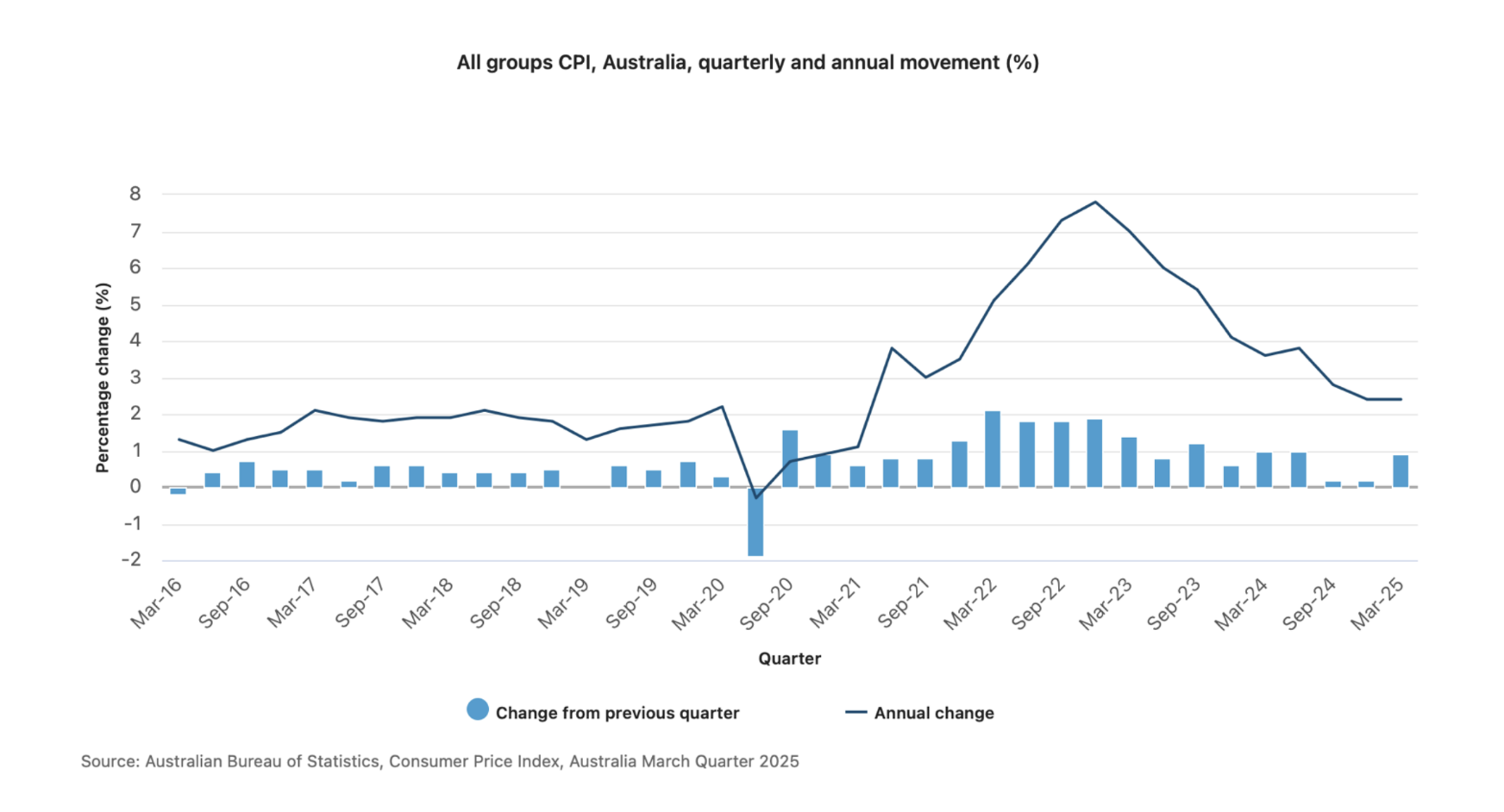
The latest figures from the Australian Bureau of Statistics showed the Consumer Price Index (CPI) rose 2.4 per cent over the 12 months to the March quarter.

Meanwhile, underlying inflation, as represented by the trimmed mean, fell to 2.9 per cent for the March quarter, down from 3.3 per cent in the December quarter. That’s the lowest it’s been since December 2021.

The latest inflation data left many economists almost certain of more interest rate relief to come.

“We’ve come a long way and it hasn’t been easy, but we have made good progress on bringing inflation down and keeping unemployment low,” RBA Governor Michele Bullock recently said.

“This is a good position for the economy to be in as we approach a period of uncertainty.”

“The Board will continue to look at the data to assess if the economy and inflation continue to evolve as expected.”

It’s widely expected we will see more cash rate cuts as 2025 unfolds, with some saying there could be up to five in total this year.

Even before the latest cash rate announcement, lenders had started cutting mortgage interest rates. With so much movement, now is the time to shop around.

The latest cash rate cut is also expected to drive an uptick in refinancing. Data released by Money.com.au found that one in three borrowers would be open to fixing their loans if the cash rate went down again in May, which it did.

To review your home loan or explore your finance options, get in touch today.

The next cash rate announcement will be on 8 July.

Home value movements

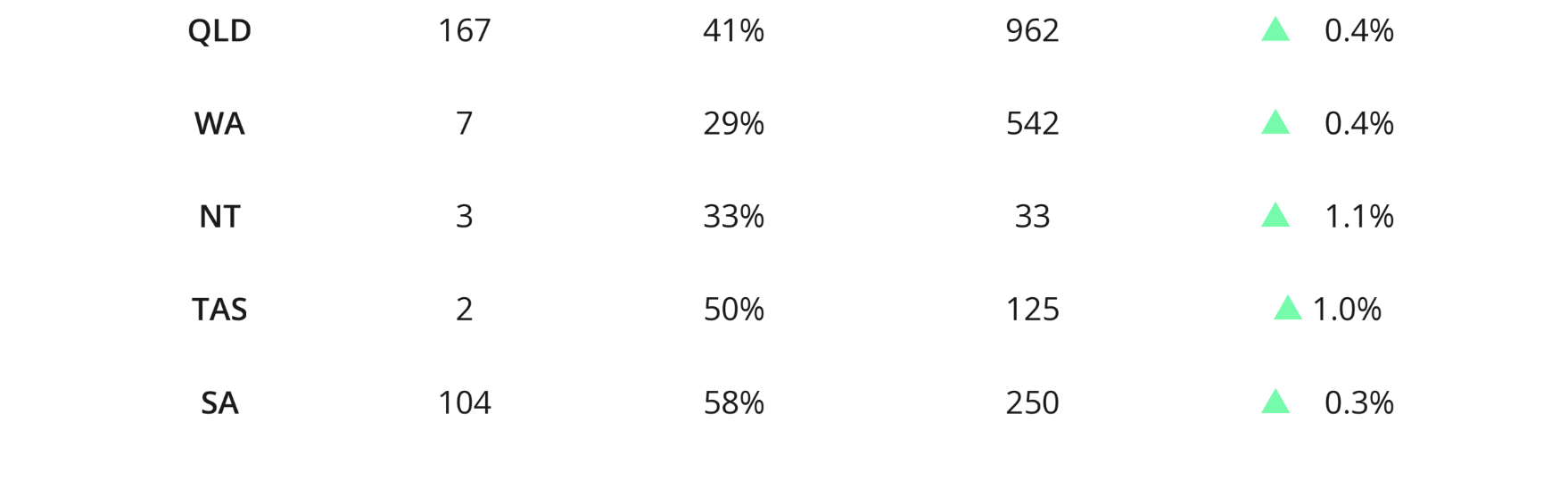
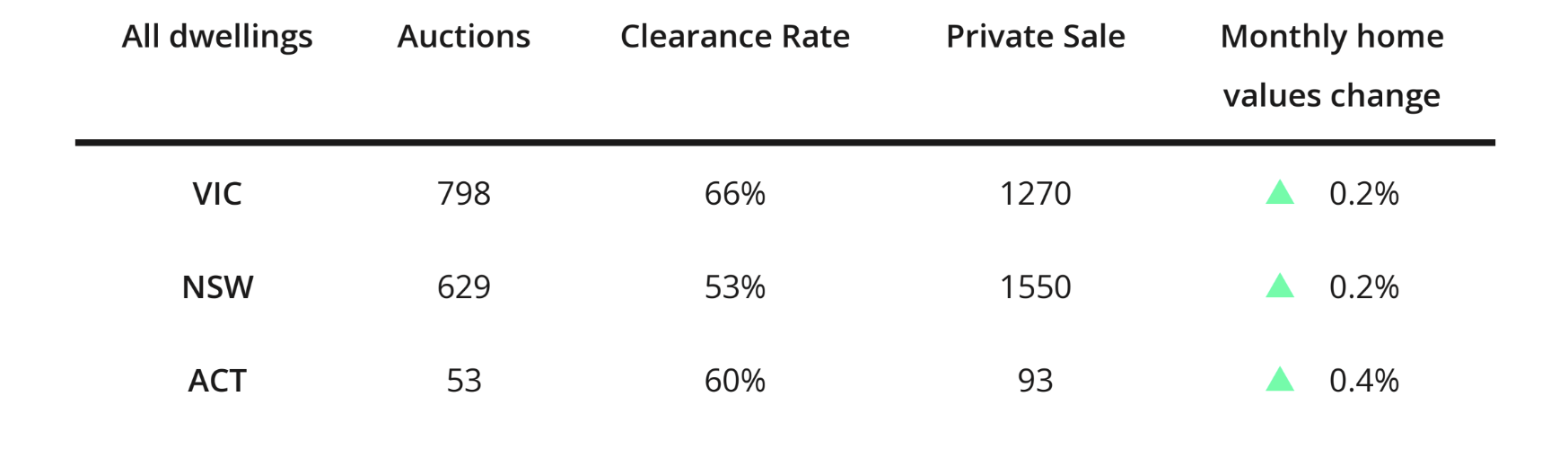
Property values across the nation continued to climb in April, with Cotality (known previously as CoreLogic) recording a 0.3% rise in values to a new record high.

Every capital city recorded a positive change, ranging from 1.1% in Darwin, to 0.2% in Sydney and Melbourne.

“The rate cut in February supported an upwards inflection in housing market conditions, but the positive influence from lower rates seems to be losing some potency,” Cotality research director Tim Lawless said.

“At the same time, household confidence slipped in April, with the US’s ‘Liberation Day’ tariff announcements and the federal election causing uncertainty.”

“It is likely this may be causing some buyers and sellers to delay their decisions.”

Regional housing growth continued to outpace the capital cities in April. This has been the case since October last year.

*Monthly Home Values figures as of 30 April 2025
*Australian auction results, clearance rates and recent sales for the week ending 18 May 2025
*The clearance rate is preliminary and current as of 9:30am AEST, 19 May 2025

Ready to buy?

Winter can be a great time to purchase, with reduced competition among buyers generally and potentially motivated sellers.

To explore your finance options, please contact us for assistance.

Negative gearing explained

support · May 27, 2025 ·

Negative gearing is a popular investment strategy in Australia, but it’s also a term that often comes up in the media, particularly when there’s an election looming, like right now.

Let’s take a look at what it means, what capital gains tax (CGT) is and why you need to know about these terms if you plan to invest in property.

What is negative gearing?

Negative gearing is where the expenses associated with owning an asset such as an investment property (including interest expenses) are greater than the income earned from the asset.

So, say the rental return on your investment property is $2,800 a month, but your investment property costs (e.g. your home loan interest, property management fees, insurance, maintenance costs, etc.) set you back $3,200 a month. That means you’re negatively geared.

Investors who are negatively geared can deduct the losses they incur against other income, including salary and wages.

Positive gearing is the opposite – the rental returns exceed the costs of owning the property.
Neutral gearing is when an investment property’s income and expenses are pretty much equal.

Why is negative gearing attractive to investors?

In Australia, it’s estimated two in three rentals (just over one million) lose money. So, why would anyone want an asset that’s making them a loss?

Some investors are willing to negatively gear their properties in the hope that the capital gain (the sale price minus the cost of the asset) when they sell the property will more than offset those losses.

The ability to deduct losses and reduce one’s taxable income, thereby lowering the amount of income tax you pay, is another real drawcard for many investors, particularly those in higher tax brackets.

What is capital gains tax (CGT)?

CGT is the tax you pay on profits when you sell the property. Although it’s referred to as ‘capital gains tax’, it’s part of your income tax. It’s not a separate tax.

If you’ve owned the property for more than 12 months, you can reduce your capital gain by 50 per cent. This is referred to as the capital gains tax discount.

Why has negative gearing been in the news?

There have been calls to overhaul negative gearing and the CGT discount for years, as opponents believe they exacerbate the housing crisis and favour higher income earners.

The Henry Tax Review conducted by Treasury in 2010, for example, recommended a 40 per cent capital gains discount, which was not adopted.

More recently, the Australian Council of Social Service (ACOSS) called for reforms to negative gearing and capital gains tax discounts.

The ACOSS report, Homes for living, not wealth creation, found the wealthiest 10 per cent of households hold two thirds of the value of investment property.

ACOSS called on the next government to halve the CGT discount to 25 per cent over five years, reducing it by five per cent per year; restrict negative gearing for new investments so that investment losses can only be offset against investment income rather than wages; and phase out negative gearing for existing investments over five years.

So, what are the major parties saying in the lead up to the May election?

Greens leader Adam Bandt has flagged he will push for negative gearing changes if his party holds the balance of power after the upcoming election.

Labor went to the 2016 and 2018 elections with a proposal to overhaul negative gearing. However, it’s not on the government’s reform agenda at present.

“We have no plans to do anything on negative gearing, because we don’t think that is the main issue. The issue is supply, and that’s what we’re tackling,” Anthony Albanese recently said.

Opposition leader Peter Dutton has “guaranteed” the Coalition would leave negative gearing and the capital gains tax concession unchanged should it win the upcoming election.

Ready to buy an investment property?

Before making any property investment decisions, it’s always wise to speak to your tax advisor or a financial planner.

If you do decide to buy, we can assist with the finance side of things. Please contact us for assistance and we will run you through your investment loan options.

How do construction loans work?

support · May 20, 2025 ·

If you’re planning to build your own home, a construction loan could help finance your project. Unlike standard home loans, construction loans provide funds progressively in stages as your new home is built. Here are a few of the key points you should consider.

A quick guide to construction loans

Construction loans differ significantly from traditional home loans, which typically pay a lump sum upfront to purchase an existing property. Instead, your lender releases funds in stages, known as “progress payments,” aligning with specific phases of construction.

Common stages of construction include:

Base or slab stage
Covers site preparation, including excavation, plumbing, and laying the concrete slab foundations that will support your home.

Frame stage
Construction of your home’s frame, including structural beams, roof trusses, and internal and external walls, clearly outlining your home’s layout.

Lock-up stage
Your home is now secure and weatherproof, including the installation of external walls, windows, doors, roofing, guttering, and external cladding, making the property secure and lockable.

Fit-out stage
Installation of internal fittings and fixtures such as plasterboard, internal doors, cabinetry, kitchen and bathroom fittings, electrical wiring, plumbing, tiling, and other interior elements.

Completion stage
Final touches, including painting, flooring, appliances, final plumbing and electrical connections, and external work like landscaping, driveways, or fencing. Once completed, your home is inspected and prepared for occupancy.

Disclaimer: The stages outlined above are for general information purposes only and may differ from builder to builder. Construction contracts can vary significantly, and specific stages may differ in name, order, or scope. Always refer to your individual builder’s contract for accurate details and consult a qualified professional for advice tailored to your situation.

At each stage, your lender will finance the construction after inspecting the completed work. This ensures funds are appropriately used and the project remains within the agreed budget and timeline.

Construction loans are usually structured as interest-only loans during the building period. Once construction is complete, the loan typically reverts to principal and interest repayments. Each payment is released only after the completion of the specified building stage, confirmed by inspections to ensure quality and adherence to agreed plans.

Applying for a construction loan: What you need to know

Applying for a construction loan is similar to applying for a standard home loan but with some additional documentation specific to the building project.

You’ll generally need:

1. Standard loan documents
These help your lender assess your financial situation and borrowing capacity:

  • Identification documents

  • Proof of income (e.g. payslips, tax returns)

  • Details of assets and liabilities (e.g. savings, credit cards, existing loans)

2. Construction-specific documents
These are typically provided by your builder or obtained during the planning stage:

  • Signed fixed-price building contract with a licensed builder

  • Contract of sale for the land (if applicable)

  • Council-approved plans and specifications

  • Quantity surveyor report (if required by lender)

  • Evidence of builders insurance and relevant permits

3. Documents required during construction
To access progress payments from your lender, you may need to provide:

  • Signed progress payment invoices from the builder

  • Receipts for out-of-contract items or variations

Keep in mind: Each lender has different policies and documentation requirements depending on the nature of your build and your personal circumstances. It’s important to clarify what’s needed early in the process. As your mortgage broker, I can help you understand what to expect and support you every step of the way.

What else do I need to consider?

Before you commence your build, it’s important to be clear on exactly what’s included in your building contract. There could be additional expenses you’ll need to budget for, such as landscaping, fencing, appliances, or upgrades.

It’s a good idea to set aside a contingency fund for unexpected costs that may not be covered by your construction loan.

Unlike purchasing an existing home, building from scratch takes time and may face delays from weather, labour shortages, or material availability. It’s a good idea to approach your build with realistic expectations about timelines and completion.

If you’re building in a new estate, be aware that local amenities such as shops, schools or parks may still be under development when you move in.

Ready to start building your dream home?

Building your own home can be an exciting but complex journey. As your mortgage broker, I’m here to guide you through what finance options could be available to you.

Please contact us for assistance to explore your construction loan options and take the first step towards bringing your home to life!

  • « Go to Previous Page
  • Page 1
  • Interim pages omitted …
  • Page 4
  • Page 5
  • Page 6
  • Page 7
  • Page 8
  • Go to Next Page »
  • Disclosure information
  • Affiliates
Presidio Finance Consulting Pty Ltd
ABN 51128973508
Australian Credit License 391109
Level 1, 32 Logan Rd
Woolloongabba , QLD, 4102
PO Box 8259
Woolloongabba, QLD, 4102

The material on this website has been prepared for general information purposes only and not as specific advice to any particular person. Any advice contained on this website is General Advice and does not take into account any person's particular investment objectives, financial situation and particular needs. Before making an investment decision based on this advice you should consider, with or without the assistance of a securities adviser, whether it is appropriate to your particular investment needs, objectives and financial circumstances. In addition, the examples provided on this website are provided for illustrative purposes only. Although every effort has been made to verify the accuracy of the information contained on this website, Infocus, its officers, representatives, employees and agents disclaim all liability (except for any liability which by law cannot be excluded), for any error, inaccuracy in, or omission from the information contained in this website or any loss or damage suffered by any person directly or indirectly through relying on this information.

This website uses cookies to improve your experience. We'll assume you're ok with this, but you can opt-out if you wish. Cookie settingsAccept
Privacy & Cookies Policy

Privacy Overview

This website uses cookies to improve your experience while you navigate through the website. Out of these cookies, the cookies that are categorized as necessary are stored on your browser as they are as essential for the working of basic functionalities of the website. We also use third-party cookies that help us analyze and understand how you use this website. These cookies will be stored in your browser only with your consent. You also have the option to opt-out of these cookies. But opting out of some of these cookies may have an effect on your browsing experience.
Necessary
Always Enabled
Necessary cookies are absolutely essential for the website to function properly. This category only includes cookies that ensures basic functionalities and security features of the website. These cookies do not store any personal information.
SAVE & ACCEPT